Tuna Karamamu is one of the most demanding and least-known spiritual practices beyond the Amazon rainforest itself. It is neither a tourist ritual nor a piece of folklore, but an ancestral technology of knowledge passed down through generations. Its central purpose is to establish contact with Arutam (the Great Spirit), the spiritual force that, according to the Shuar worldview, sustains the balance between human beings, animals, and the forest.
Drawing on the account of Arutam Ruymán, who has practiced this ritual throughout his life, we can reconstruct not only the steps of the ceremony but also the universe of meanings that supports it: purification, dreams as sacred territory, the relationship between time and consciousness, and the body as an instrument of knowledge.
Two Pillars: Water and Tobacco
The very name of the ceremony encapsulates its structure. Tuna means waterfall, while karamamu refers to drinking tobacco and being overcome by it on the spot. Together, the two terms point to the ritual’s twin foundations: “to die to tobacco at the waterfall.”
The first pillar is bathing beneath the waterfall, understood as an act of purification. Immersing oneself beneath the falling water is not an act of hygiene but a symbolic gesture of release. The practitioner lets go of the burdens, distractions, and mental noise accumulated in daily life. At the same time, contact with the rushing water is regarded as a source of strength—the energy that the Shuar call the force of Arutam—which is believed to accompany the person during the coming month, the days ahead, and, more broadly, throughout their future.
The second pillar is the ingestion of liquid tobacco, prepared in a much more diluted form than most people are familiar with. It is a light, clear infusion consumed in considerable quantities—between half a liter and one liter. Participants are then expected to accomplish something physically demanding: keeping the tobacco inside their bodies for several hours.
This retention is not an arbitrary ritual requirement but the technical core of the practice. The retained tobacco serves as fuel for dreams. The longer it remains in the stomach, the deeper and more extended the dream state becomes, to the point that the tobacco is said to be “consumed” only during the dream itself.
Mastering this retention requires years of training. It is an exercise that is extraordinarily difficult at first but gradually becomes more manageable through practice, while never ceasing to be physically demanding.
Dreams as a Realm of Knowledge
Perhaps the most remarkable aspect of this tradition is its understanding of dreams—not as mere rest, but as a domain of knowledge with different levels of depth. According to this worldview, dreams unfold in layers that move progressively farther away from ordinary waking consciousness, and it is within the deepest of these layers that the future may reveal itself.
The experience is described as a way of transcending space and time. In dreams, one may simultaneously witness events occurring in distant places or revisit one’s own past with astonishing clarity—as vividly, Ruymán explains, as the leaves or toucans he can see before him while speaking. The future, however, does not appear alongside the past in the same dream. Instead, it emerges in separate dreams and only when the dreamer reaches the deepest levels of the experience.
According to Shuar tradition, it was precisely this capacity that enabled the ancient forest shamans to foresee future events through the tobacco ceremony performed beside the waterfall.
It is worth noting that this understanding of dreams as a source of prophetic vision is not unique to the Shuar people. Variations of the same idea appear throughout many Indigenous cultures of the Amazon and elsewhere in the world, where dreaming is regarded as a gateway to forms of knowledge inaccessible to ordinary waking consciousness.
Arutam, Warriors, and Temporary Leadership
Historically, the waterfall ceremony was closely associated with decisive moments in Shuar life. Warriors undertook it before battle in search of a vision revealing who should lead the coming conflict and who had received the favor of the spiritual force. Young people, around the age of twelve, also performed the ritual as part of their search for motivation and the vision of Arutam needed to guide their lives.
This reveals a fundamental aspect of traditional Shuar social organization: the absence of permanent leadership.
Whoever received Arutam’s vision became leader only for that specific battle. Before the next conflict, everyone would return to the waterfall, drink the tobacco once more, and await the spirit’s guidance. Leadership, in this system, is neither inherited nor permanent. It must continually be renewed and legitimized through direct spiritual experience.
It represents a radically different model of authority from the enduring hierarchical structures found in many other societies. Here, the right to lead others comes from a spiritual calling rather than from inherited status or institutional power.
A Key Difference: Tobacco and Ayahuasca
Ruymán clearly distinguishes this ceremony from another well-known Amazonian practice: the use of Natem, commonly known as ayahuasca.
Whereas visions induced by Natem are generally directed toward healing—revealing how spiritual shadows, harmful influences, or personal and collective forms of imbalance affect a person’s life—the waterfall tobacco ceremony serves a different purpose.
Although the guide acknowledges that he has healed family and emotional wounds through the dreams and visions experienced during Tuna Karamamu, he emphasizes that healing is not its primary objective.
The ultimate purpose of the ceremony is to receive messages: whispers from the spirit carried within the sound of the falling water. These messages, he insists, are neither symbolic nor vague warnings. Rather, they are announcements of events that tend to come true sooner or later. For this reason, participants are expected to approach every dream with profound respect, almost as a sacred revelation.
Preparation: Fasting, Discipline, and Collective Care
The ceremony extends far beyond the waterfall bath and the drinking of tobacco. It is framed by a process of preparation every bit as rigorous as the ritual itself.
Reaching the waterfall requires climbing rocks, crossing rivers, and navigating difficult terrain. These challenges demand genuine caution, and organized groups undertaking the journey are even advised to carry health insurance because of the physical risks involved.
After bathing, the atmosphere becomes solemn. There is no room for laughter or casual conversation; instead, participants embrace silence and calm.
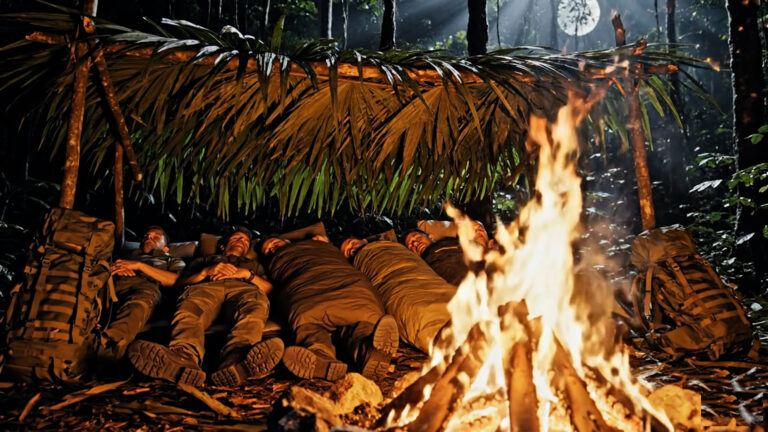
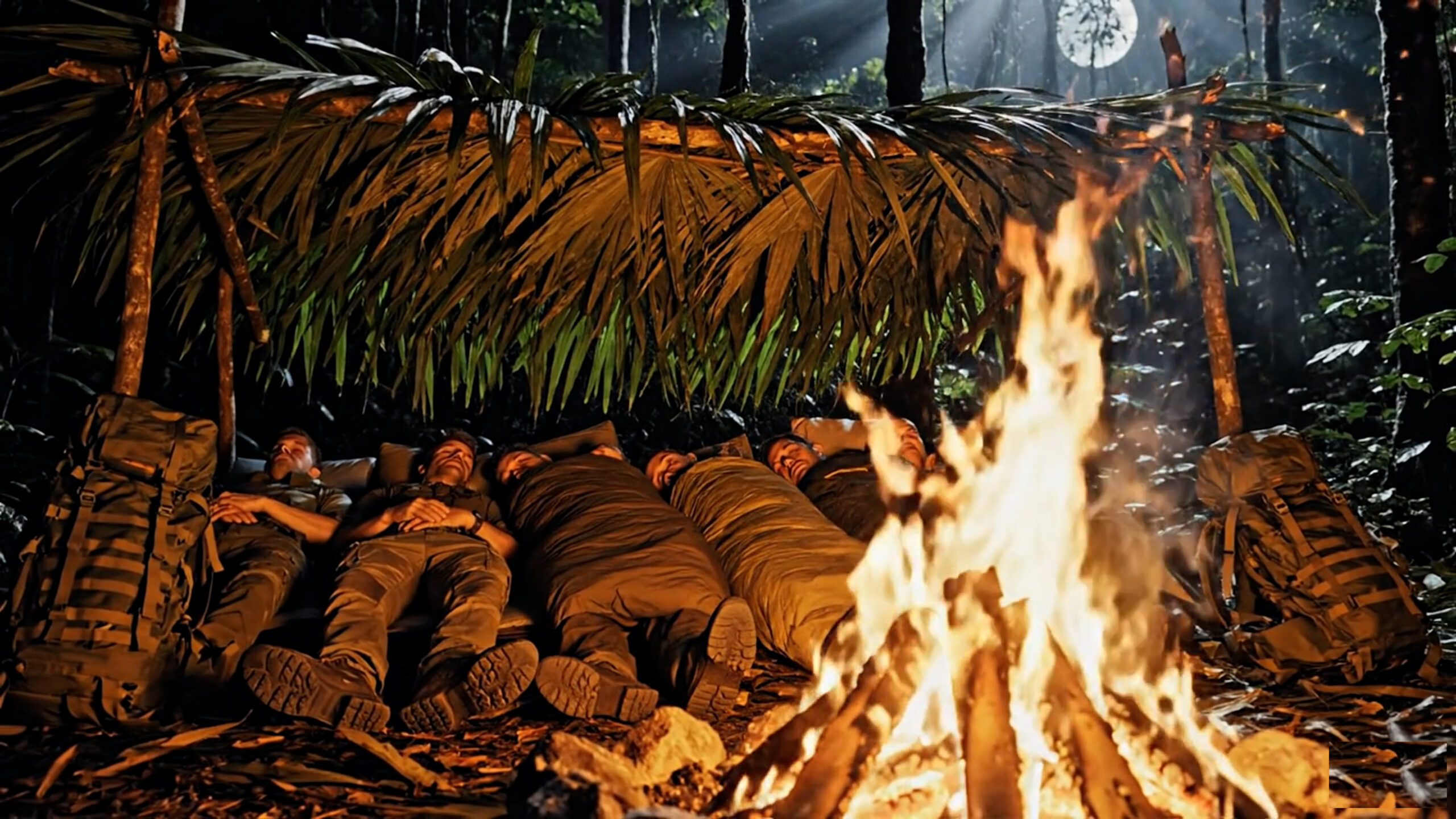
Everyone lies down to sleep close to one another, since the profound sleep induced by the tobacco makes proximity unproblematic. Even so, participants are advised to bring warm clothing, a blanket, and proper neck support, as they remain in the same position for hours while the cool night air of the rainforest settles in.
One of the ceremony’s most meaningful teachings concerns respect for another person’s dream. If someone cannot retain the tobacco and vomits, they simply drink more. Under no circumstances should another participant be awakened for assistance, except if a dangerous animal—such as a jaguar—appears.
Even then, the presence of wild animals is understood within the framework of rainforest tradition. During these ceremonies, animals are said to approach those seeking Arutam, sharing their presence rather than threatening them. Such encounters are meant to be received with calm and respect, not fear or violence.
The Complete Cycle: From the Waterfall to Natemamu
Ruymán also explains how Tuna Karamamu naturally continues with the Natemamu (the ayahuasca ceremony) in the following days.
Participants return from the waterfall physically weakened and still fasting. The discipline continues. Mirrors, deodorants, perfumes, and makeup are avoided; only the unadorned body stands before Natem.
Preparation of the sacred brew then begins. The vines are pounded while participants take turns playing a drum throughout the day. Faces are painted with annatto, and ceremonial names are bestowed.
Natural beverages also play an important role. Among them is chucula de maduro, along with chicha, the fermented cassava drink traditionally prepared by women through an ancient method: chewing cooked cassava and returning it to the vessel so that fermentation begins through the enzymes in their saliva.
Within Shuar tradition, this drink is associated with Nunkui, the Great Mother of the Forest, who is said to have taught women the cultivation of cassava. Chicha, often described as “the milk of the forest,” is the last nourishment permitted before the Natemamu ceremony. Its sweetness is even said to soften the taste of the vomiting induced by the sacred brew.
A Knowledge System That Endures
Beyond its ritual details, Tuna Karamamu stands as powerful testimony to the sophisticated systems of knowledge that Amazonian peoples have developed over centuries concerning the body, dreams, and the natural world—without laboratories or written texts.
It is a tradition that demands physical commitment, discipline, and profound respect for the rainforest and all those who inhabit it.
To learn about it, even through a single account, is also to honor the wisdom of generations who have known how to listen to what the water, the tobacco, and dreams have to say.
Watch the full talk: